
Essential Guide to Synthetic Turf Sweeping
Everything facility managers need to know about maintaining synthetic turf — from daily surface care to choosing the right equipment.
A synthetic turf field is a six- or seven-figure investment. Protecting it requires a consistent maintenance program — not a complicated one. This guide covers why maintenance matters, what type of surface you’re working with, and what a practical schedule looks like for each.
1. Why Proper Maintenance Matters
Natural grass has a built-in self-repair mechanism. Synthetic turf does not. Every piece of debris left grinding against the fibers, every compacted zone ignored, every migration of infill unaddressed — it accumulates. Fiber degrades. Infill redistributes into unsafe patterns. Performance drops.
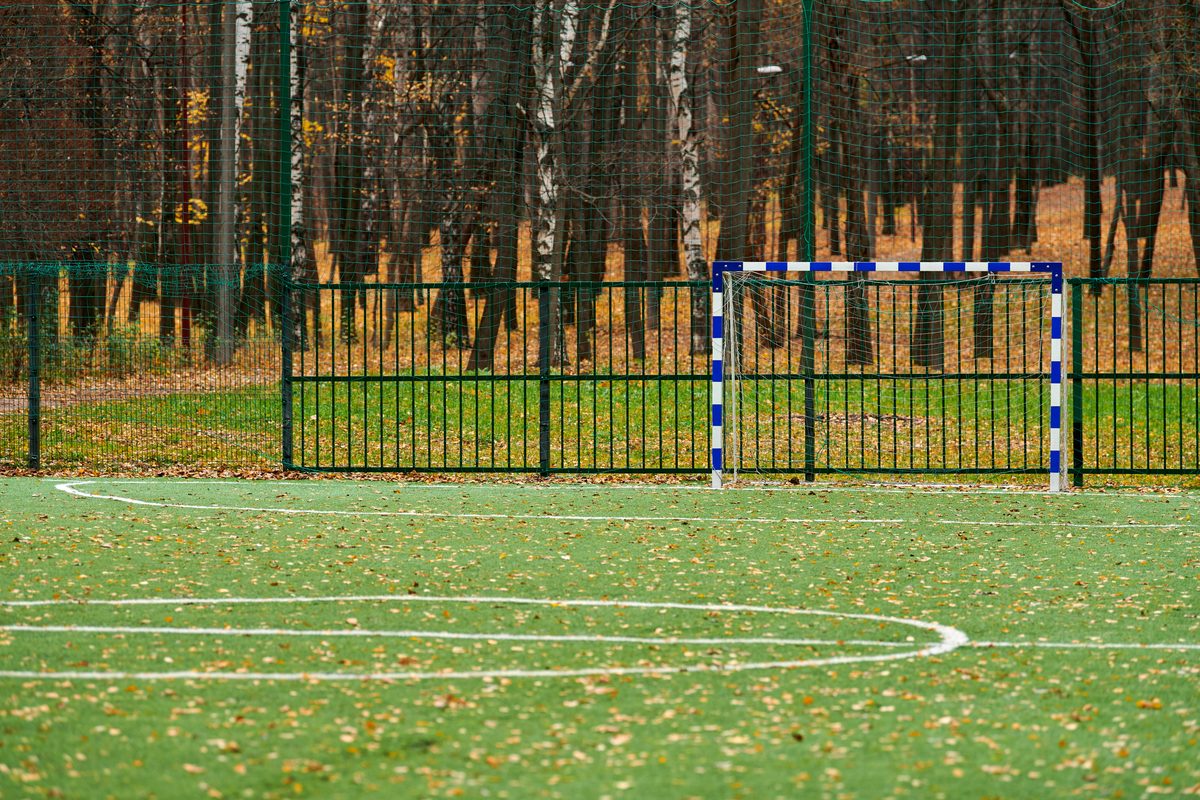
The consequences extend well beyond aesthetics. Debris creates uneven playing surfaces that increase injury risk. Matted fibers reduce cushioning. Displaced infill creates hard spots no shock pad can compensate for. Left unaddressed, these issues compound: degraded playing experience, a shorter field lifespan, and premature capital replacement on an asset expected to last 8–12 years.
The International Synthetic Turf Association (ISTA) estimates that proper maintenance protocols can add 2–4 years to a field’s functional life.
So why do so many facilities see premature wear? Often it’s not lack of equipment — it’s that the equipment they have is heavy, complicated, and intimidating enough that it doesn’t get used as often as it should.
2. Types of Synthetic Turf Surfaces
Not all synthetic turf is the same — and the differences determine your entire maintenance strategy. There are three primary surface categories currently in use.
Infill Systems
The majority of installed fields worldwide use an infill system: loose granular material — crumb rubber, silica sand, TPE, cork, or blends — distributed throughout the turf pile to provide cushioning, stability, and fiber support. Infill fields require active management. Infill migrates into high-traffic zones and escapes the perimeter, creating safety and performance issues that need regular correction.

Zero-Infill Systems
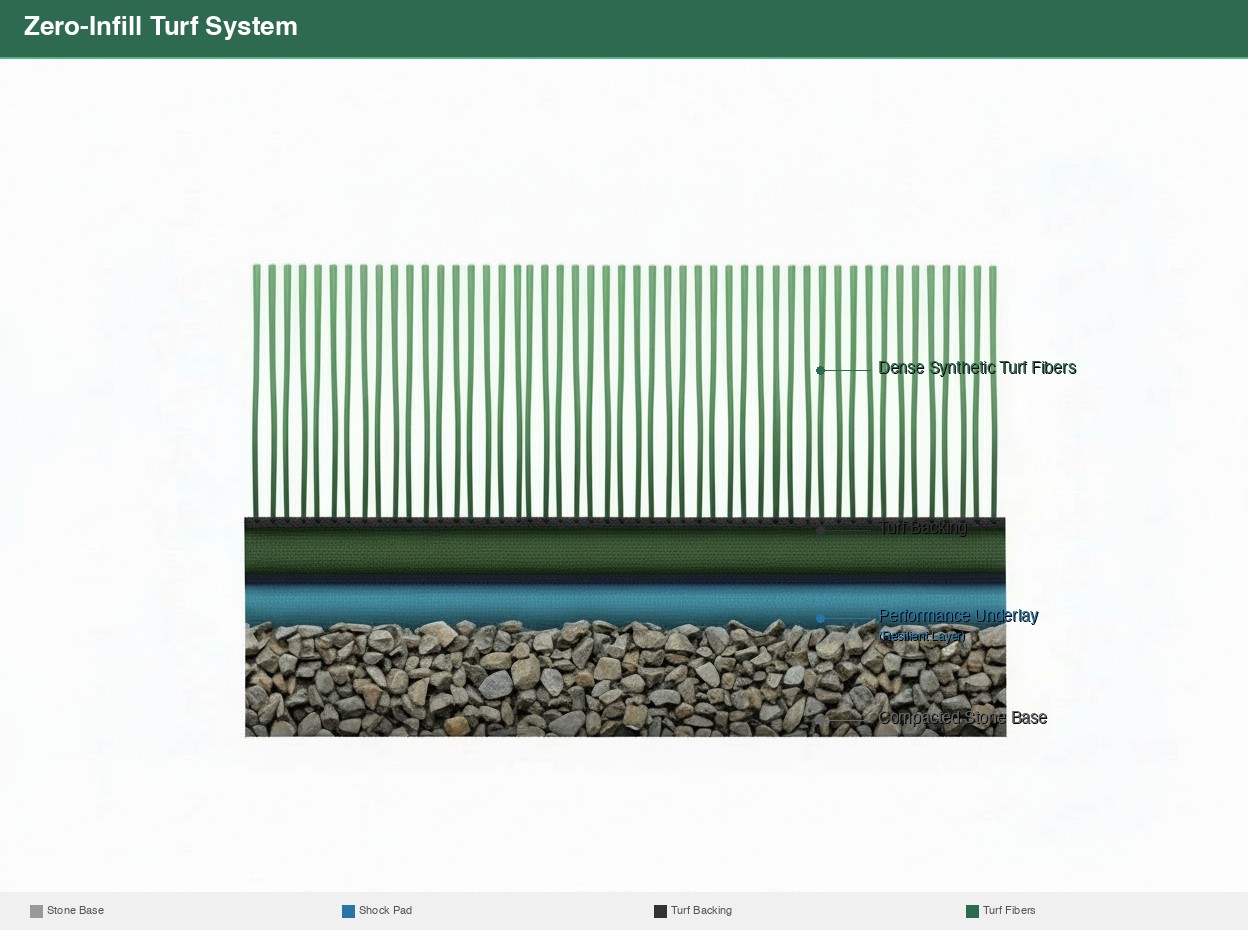
Zero-infill turf — also called non-infill or free-draining turf — relies on fiber architecture and performance underlays for cushioning, with no granular infill in the pile. Without infill to manage, the deep-grooming tasks that consume most of a traditional maintenance budget disappear. Surface cleanliness and fiber orientation become the primary objectives.
Hybrid Systems
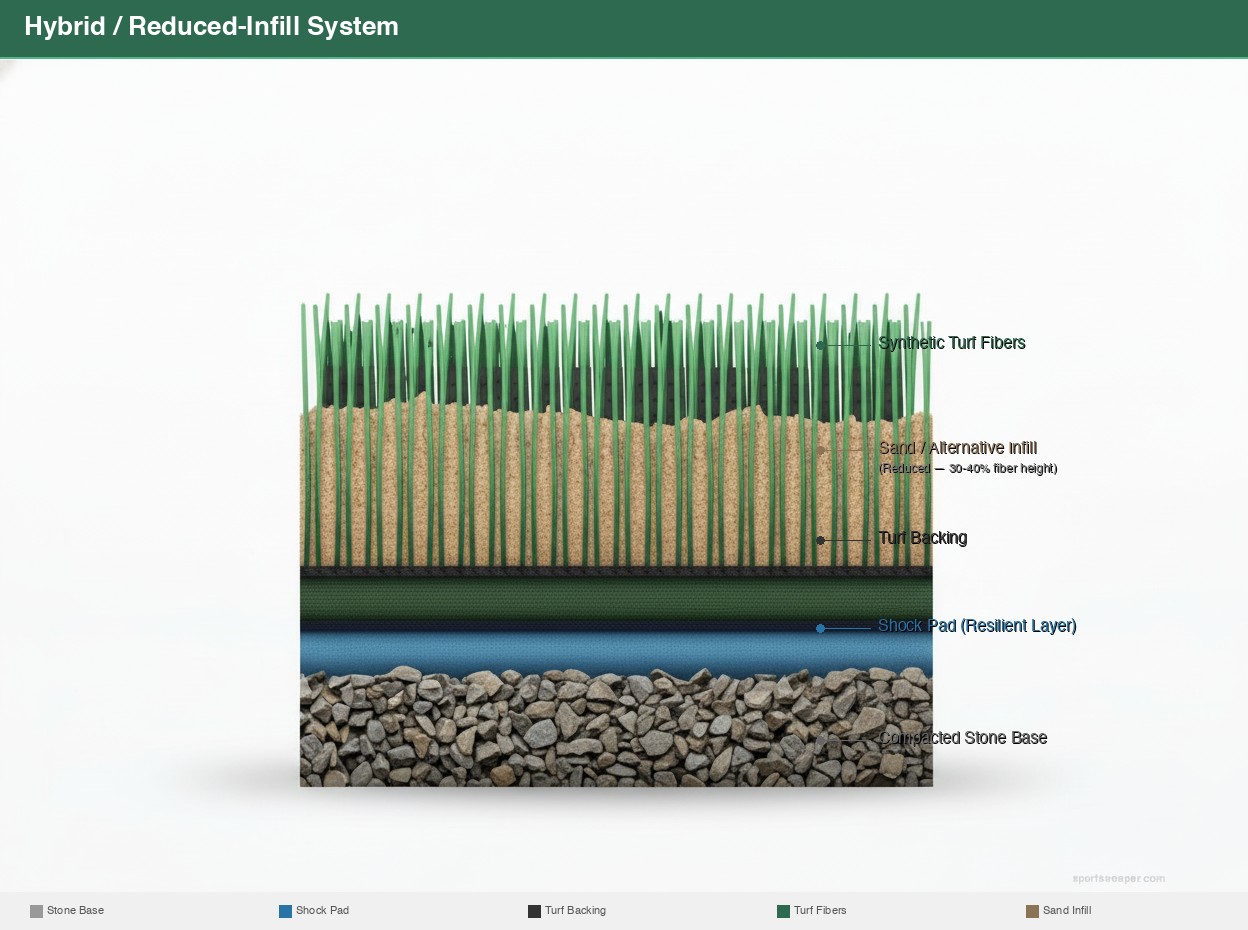
Hybrid systems combine engineered fiber profiles with performance shock pads, using sand-only or minimal TPE infill for some cushioning. Maintenance requirements fall between full infill and true zero-infill — less intensive than a traditional crumb rubber field, but still requiring periodic infill management.
Where the Industry Is Heading
The synthetic turf industry is under significant regulatory pressure, and the direction is clear: away from crumb rubber infill, away from PFAS-containing materials, and toward zero-infill and alternative-infill systems.
In October 2023, the European Union adopted EU Regulation 2023/2055, which bans the sale of crumb rubber infill for synthetic turf fields, effective October 17, 2031. The regulation targets microplastics under the EU REACH framework — synthetic turf was identified as one of the largest single-category sources of microplastic pollution in Europe. After 2031, new installations in the EU must use compliant alternatives or transition to zero-infill systems entirely.
In the United States, state-level legislation is moving on a parallel track. Colorado SB 24-081 bans the installation of synthetic turf containing intentionally added PFAS, effective January 1, 2026. Vermont has enacted a similar prohibition. Connecticut, Minnesota, and California are in various stages of restricting PFAS in turf materials.
These aren’t fringe regulations in small markets. They represent the leading edge of a broader shift. The manufacturers who supply the industry are already designing for a post-crumb-rubber world — leading turf manufacturers are specifying friction sweepers into new installations because they know the maintenance equation is changing. The maintenance strategy you adopt today should serve both the infill fields you manage now and the zero-infill surfaces that will replace them.
3. Your Maintenance Plan
Different surfaces need different maintenance. Here’s what works for each.
Infill & Hybrid Fields
Infill and hybrid fields require layered maintenance: consistent weekly sweeping as the foundation, plus periodic deep grooming to manage infill distribution and compaction. Traditional steel-chassis groomers earn their place here — monthly and quarterly deep work redistributes infill, relieves compaction zones, and restores drainage in ways surface sweeping alone can’t address. But the weekly pass with a friction sweeper is what prevents those conditions from accumulating in the first place. Without it, deep grooming becomes remediation instead of routine maintenance.
| Frequency | Task | Equipment | Who |
|---|---|---|---|
| Pre-game / Pre-event | Full-field surface sweep; remove debris, groom fibers upright | Friction sweeper | Any staff member |
| Weekly | Full-field sweep; capture accumulated debris, check field edges | Friction sweeper | Any staff member |
| Monthly | Deep groom: redistribute and level infill, relieve compaction zones | Steel-chassis groomer (trained operator) | Trained operator |
| Quarterly | Infill depth inspection; check for displacement and compaction; visual damage assessment | Depth gauge, visual inspection | Groundskeeper or facility manager |
| Annually | Professional deep clean; bacteria treatment; infill replenishment assessment | Professional service contractor | Contracted specialist |
Zero-Infill Fields
The simplicity here is the point. No infill to redistribute, no compaction to remediate, no depth gauges or groomer calibration. Friction sweeping is the primary — and often the only — regular maintenance tool required. Keep the surface clear of debris, keep fibers upright, and schedule a professional assessment annually to evaluate fiber wear. That’s the program.
| Frequency | Task | Equipment | Who |
|---|---|---|---|
| Pre-game / Pre-event | Full-field surface sweep; remove debris, groom fibers upright | Friction sweeper | Any staff member |
| Weekly | Full-field sweep; debris removal, fiber grooming | Friction sweeper | Any staff member |
| Monthly | Visual inspection: fiber wear patterns, seam integrity, drainage | Visual inspection | Groundskeeper or facility manager |
| Annually | Professional cleaning if needed; fiber performance assessment | Professional service contractor (if warranted) | Contracted specialist |
Choosing the Right Equipment
Three factors drive the right configuration: number of fields, staff capability, and total cost of ownership. A single 8ft SportSweeper suits most facilities with one or two fields at moderate use — a full football field takes about 12 minutes. Managing three or more fields, or running a high-frequency tournament schedule, makes a duplex configuration worth the investment: sweep time cuts roughly in half, and the time savings compound quickly across a season. If maintenance responsibility rotates across coaches, custodial staff, or volunteers, complexity is your enemy — choose equipment anyone can run safely on day one without training or calibration.
Total cost matters more than purchase price. Factor in fuel, training requirements, and service downtime. SportSweeper mats have no moving parts; maintenance is as simple as rinsing and drying the mat. For sites with metal debris risk near bleachers or multi-use venues, the MagSweeper Combo adds a magnetic collection bar that captures ferrous debris ahead of the friction mat — both debris types addressed in a single pass. The full SportSweeper lineup shares the same hitch attachment and the same operational procedure: connect, tow, done.
Ready to simplify your maintenance? Explore the SportSweeper lineup or get a quote for your facility. Tell us about your fields, your staff setup, and your use intensity — we’ll recommend the right configuration.